Why the islands stay drier
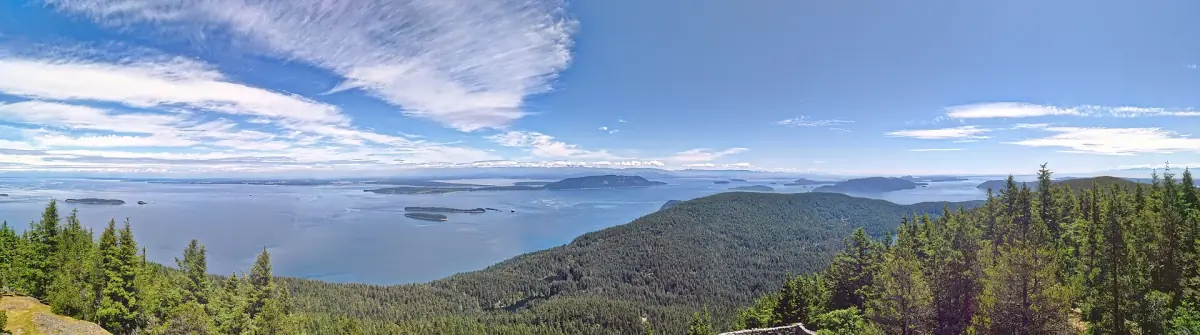
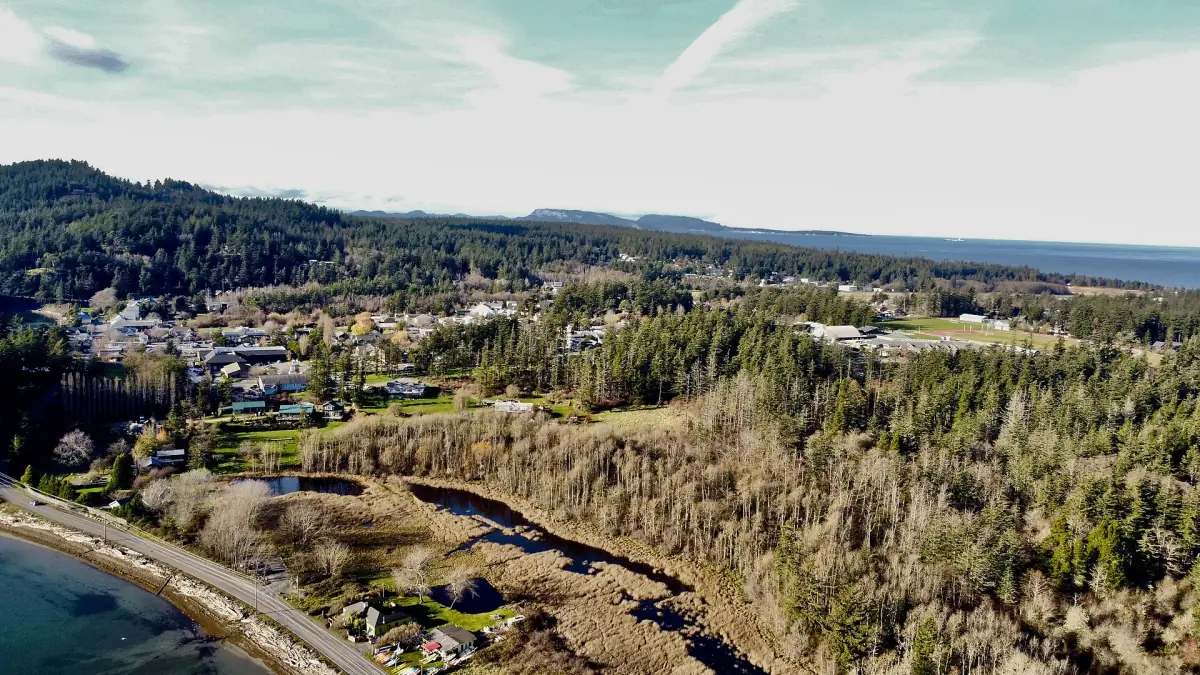
The San Juan Islands lie in the rain shadow of the Olympic Mountains. The mountains catch much of the rain that comes in from the Pacific, so less of it reaches the islands. The numbers below come from a weather station at Friday Harbor Airport. They are a guide to the airport and the lowlands nearby, not to every spot. A summit such as Mount Constitution can be different, so do not copy these values for the high points.
The figures are climate normals for 1991 to 2020, published by NOAA. They are monthly averages and not a forecast. Highs and lows are averages of the daily highest and lowest temperatures, not record values. Rainfall is the average total for the whole month.
San Juan Islands weather by month
Normals for Friday Harbor Airport, 1991 to 2020. Temperatures in °F with °C in brackets, rainfall in inches with millimeters in brackets.
| Month | Average high | Average low | Rainfall |
|---|---|---|---|
| January | 47°F (8.4°C) | 37°F (2.8°C) | 2.7 in (68.3 mm) |
| February | 49°F (9.2°C) | 36°F (2.5°C) | 1.5 in (39.1 mm) |
| March | 53°F (11.4°C) | 38°F (3.6°C) | 1.4 in (34.3 mm) |
| April | 57°F (14.1°C) | 41°F (4.8°C) | 1.0 in (25.7 mm) |
| May | 64°F (17.6°C) | 44°F (6.8°C) | 1.1 in (29.0 mm) |
| June | 68°F (20.2°C) | 48°F (8.9°C) | 0.7 in (19.0 mm) |
| July | 72°F (22.4°C) | 50°F (10.0°C) | 0.5 in (12.2 mm) |
| August | 73°F (22.9°C) | 50°F (10.0°C) | 0.7 in (17.8 mm) |
| September | 68°F (20.1°C) | 48°F (8.8°C) | 1.0 in (26.4 mm) |
| October | 58°F (14.7°C) | 44°F (6.7°C) | 2.3 in (59.4 mm) |
| November | 51°F (10.6°C) | 40°F (4.3°C) | 3.0 in (75.7 mm) |
| December | 46°F (7.9°C) | 37°F (2.7°C) | 2.4 in (62.2 mm) |
Reading the table: July has the least rain and August has the highest average daytime temperature. From these normals, July and August are the best bet for dry and mild days. That is a conclusion from averages and no guarantee for any single day. From October to December the rainfall rises to more than twice the July to September levels.
Tours for any season
Whale watching, kayaking and day trips around the islands, with live prices and availability.
The best time to visit
What each season means for the weather and for opening hours.
Summer: June to August
Highs run from 68 to 73°F (20 to 23°C), and July is the driest month. This is also the season with the longest opening hours. Moran State Park opens at 6:30 am in summer, and the Whale Museum in Friday Harbor shows a summer schedule of 10 am to 4 pm every day. Vehicle fares on the ferry carry a 35 percent surcharge from 1 May to 30 September. Reserve a car space early, see the ferry guide.
Spring: April and May
April is one of the drier months, with 1.0 in (25.7 mm), and highs reach 57 to 64°F (14 to 18°C). Nights are cool, with lows of 41 to 44°F (5 to 7°C). Shore-based whale watching at Lime Kiln Point is possible from spring to fall, depending on the salmon runs.
Early fall: September
September still averages 68°F (20.1°C) as a high and 1.0 in (26.4 mm) of rain. Several services have already finished for the year. The Bellingham day cruise ended on 20 September.
Late fall and winter: October to March
October brings 2.3 in (59.4 mm) of rain, and November is the wettest month. Highs fall to 46°F (7.9°C) in December. Moran State Park opens at 8 am in winter instead of 6:30 am. Plan for shorter opening hours and check them before you drive out.
What has changed this fall
Autumn 2026 brings several closures that depend on the calendar, not on the weather.
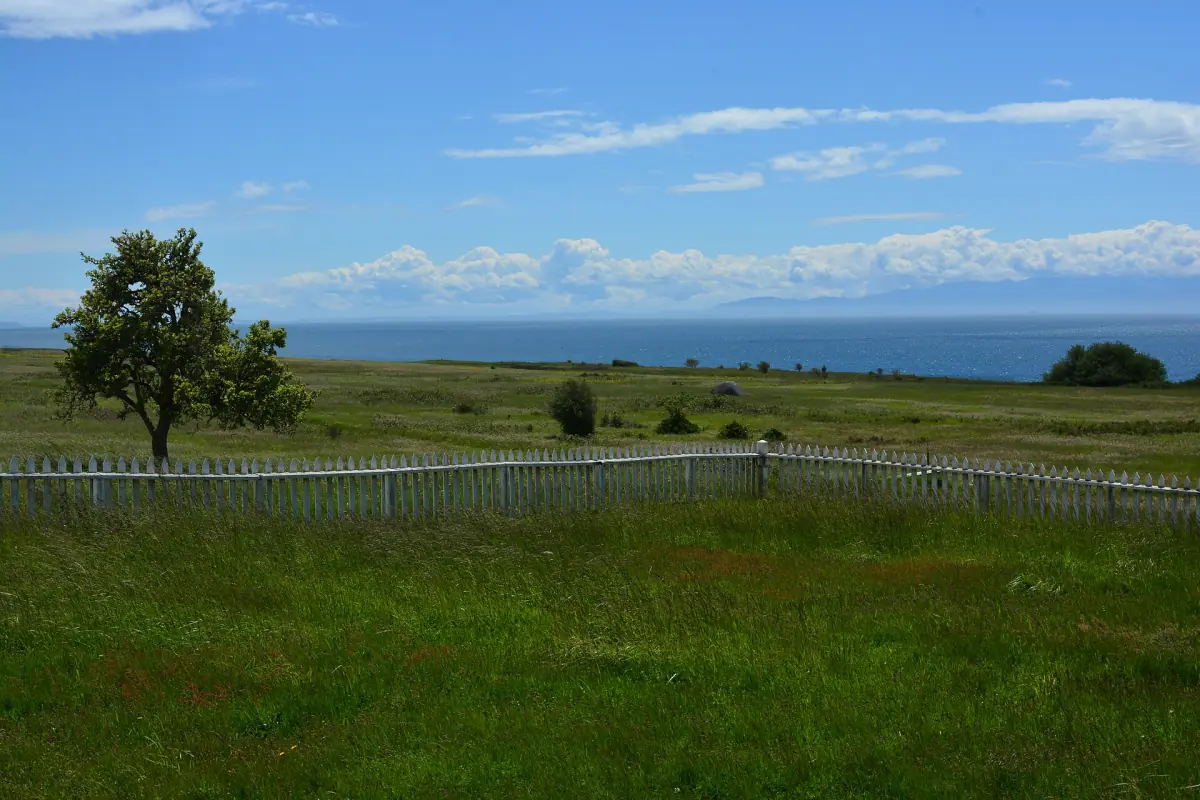
The Mount Constitution tower in Moran State Park is closed for restoration from 7 October until about 9 November 2026. The road, the viewpoint, the toilets and the visitor center stay open, and scaffolding and noise are expected at the summit. The hiker and biker campground at Moran has been closed for the winter since a notice dated 7 October 2026.
At American Camp on San Juan Island, the visitor center is open Thursday to Monday from 10 am to 3 pm. From the week of 25 October it opens Monday to Friday, 10 am to 3 pm. It closes for the season on 12 November 2026 and reopens in March 2027. The grounds at American Camp and English Camp are open at all hours.
One kayak tour operator and one bicycle rental operator in Friday Harbor have ended their 2026 seasons and now take bookings for 2027. The Lime Kiln Point interpretive center is open from about late May to mid-September, so do not count on it in October.
What the numbers do not show
Limits of the weather data on this page.
One station
All values are from Friday Harbor Airport. Orcas Island, Lopez Island and the high points can differ.
Averages, not forecasts
The normals end in 2020 and say nothing about the rest of 2026. For a trip in the next days, look at a current forecast.
Rain affects the ferry day
Check ferry alerts on the day you travel. Delays and canceled sailings happen, and the ferry guide lists the current situation.
San Juan Islands weather: frequently asked questions
What is the best time to visit the San Juan Islands?
For dry and mild weather, July and August. July has the least rain, at 0.5 in (12.2 mm), and August has the warmest average high, at 73°F (22.9°C). This is based on long-term averages, so single days can differ.
Why do the islands get less rain?
The islands are in the rain shadow of the Olympic Mountains. The mountains catch much of the rain from the Pacific before it reaches the islands.
How cold does it get in winter?
In January the average high is 47°F (8.4°C) and the average low is 37°F (2.8°C). December is slightly colder in the daytime, with a high of 46°F (7.9°C). These are monthly averages and not the coldest days.
Is October a good month?
It is cooler and wetter than summer, with a high of 58°F (14.7°C) and 2.3 in (59.4 mm) of rain. Several seasonal services have closed by then. Check opening hours for the places you plan to visit.
Does the weather change between the islands?
The figures here come from one station at Friday Harbor Airport. Hilltops such as Mount Constitution and other islands can have different conditions.